Understanding Intoeing in Children

Intoeing in children is a condition in which the feet turn inward while walking or running. It is commonly noticed during early childhood and often relates to developmental alignment changes. Frequent causes include conditions where the thigh bone rotates inward, the shin bone twists inward, or the front portion of the foot is curved. These variations are usually related to growth patterns and positioning before birth. Although many cases improve naturally, some children may experience tripping, discomfort, or gait concerns. A podiatrist can evaluate lower limb alignment and recommend supportive treatments when needed. If your child has been born with intoeing, it is suggested that you consult a podiatrist who can help you to manage this condition.

Making sure that your children maintain good foot health is very important as they grow. If you have any questions, contact Paul Potach, DPM of Illinois . Our practitioner can provide the care you need to keep you pain-free and on your feet.

Keeping Children's Feet Healthy

Having healthy feet during childhood can help prevent medical problems later in life, namely in the back and legs. As children grow, their feet require different types of care. Here are some things to consider...

Although babies do not walk yet, it is still very important to take care of their feet.

Avoid putting tight shoes or socks on his or her feet.

Allow the baby to stretch and kick his or her feet to feel comfortable.

As a toddler, kids are now on the move and begin to develop differently. At this age, toddlers are getting a feel for walking, so don’t be alarmed if your toddler is unsteady or ‘walks funny’. 

As your child gets older, it is important to teach them how to take care of their feet.

Show them proper hygiene to prevent infections such as fungus.

Be watchful for any pain or injury.

Have all injuries checked by a doctor as soon as possible.

Comfortable, protective shoes should always be worn, especially at play.

If you have any questions, please feel free to contact our offices located in Wheeling and Berwyn, IL . We offer the newest diagnostic and treatment technologies for all your foot care needs.

Read more about What to Do to Keep Your Child’s Feet Healthy

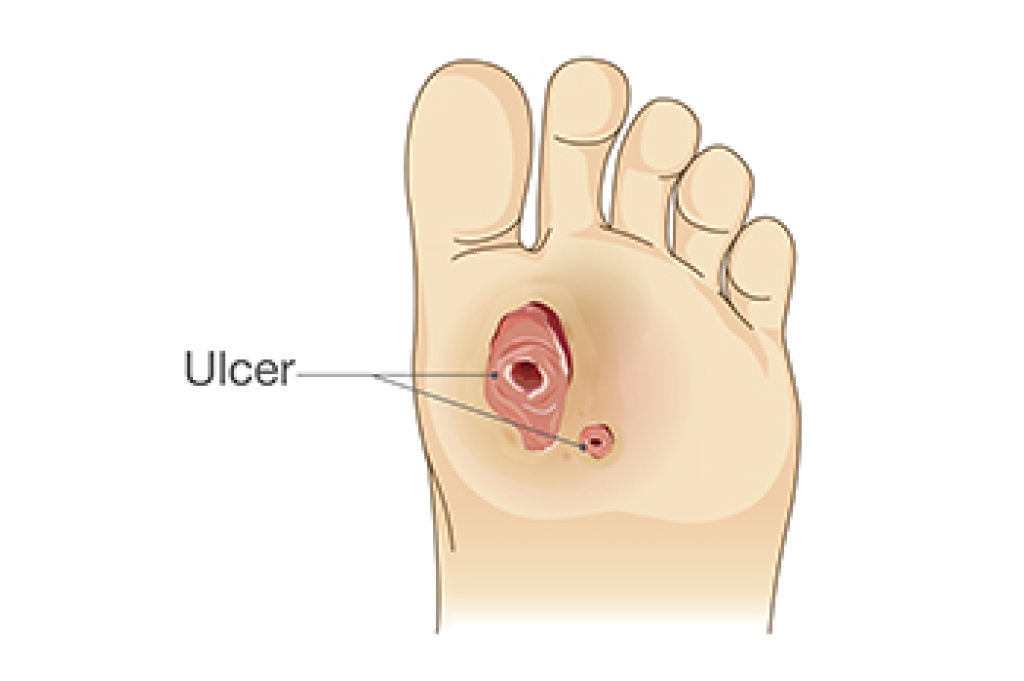
Dealing With Foot Ulcers

A foot ulcer is an open sore that may appear as a shallow red crater or a deep wound extending to tendon or bone. Ulcers often develop on the bottom of the foot or toes and are most common among people with diabetes, nerve damage, or poor circulation. When sensation is reduced, pressure or friction may go unnoticed, allowing skin breakdown to worsen. Limited blood flow slows healing and increases the risk of infection, cellulitis, or bone involvement. Structural deformities, arthritis, and abnormal walking patterns can also create pressure points that lead to ulcers. A podiatrist evaluates depth, tissue health, circulation, and nerve function, and may order imaging or laboratory testing to detect infection. Treatment includes removing unhealthy tissue, relieving pressure, controlling infection, and addressing biomechanical causes to promote healing and prevent recurrence. If you have developed foot ulcers, it is suggested that you make an appointment with a podiatrist for an exam, diagnosis, and treatment.

Wound care is an important part in dealing with diabetes. If you have diabetes and a foot wound or would like more information about wound care for diabetics, consult with Paul Potach, DPM from Illinois . Our practitioner will assess your condition and provide you with quality foot and ankle treatment.

What Is Wound Care?

Wound care is the practice of taking proper care of a wound. This can range from the smallest to the largest of wounds. While everyone can benefit from proper wound care, it is much more important for diabetics. Diabetics often suffer from poor blood circulation which causes wounds to heal much slower than they would in a non-diabetic. 

What Is the Importance of Wound Care?

While it may not seem apparent with small ulcers on the foot, for diabetics, any size ulcer can become infected. Diabetics often also suffer from neuropathy, or nerve loss. This means they might not even feel when they have an ulcer on their foot. If the wound becomes severely infected, amputation may be necessary. Therefore, it is of the upmost importance to properly care for any and all foot wounds.

How to Care for Wounds

The best way to care for foot wounds is to prevent them. For diabetics, this means daily inspections of the feet for any signs of abnormalities or ulcers. It is also recommended to see a podiatrist several times a year for a foot inspection. If you do have an ulcer, run the wound under water to clear dirt from the wound; then apply antibiotic ointment to the wound and cover with a bandage. Bandages should be changed daily and keeping pressure off the wound is smart. It is advised to see a podiatrist, who can keep an eye on it.

If you have any questions please contact our offices located in Wheeling and Berwyn, IL . We offer the newest diagnostic and treatment technologies for all your foot and ankle needs.

Read more about Wound Care

Understanding Imaging Options for Persistent Foot Pain

Persistent foot pain can be difficult to evaluate when symptoms do not clearly point to one cause. Imaging studies help clarify what is happening internally and support accurate care decisions. The process often begins with standard radiographs, which can identify alignment issues, joint changes, arthritis, and signs of repetitive stress. When those images do not fully explain symptoms, advanced imaging may be considered. Magnetic resonance imaging offers detailed views of muscles, tendons, ligaments, and other soft tissues, making it helpful when findings are unclear. Computed tomography provides sharp detail of bone structure and is useful for stress fractures, joint disease, and congenital connections between bones. In certain situations, nuclear imaging or diagnostic ultrasound can further pinpoint inflammation, injury, or altered tissue behavior. If foot pain persists, it is suggested that you see a podiatrist for an accurate diagnosis and appropriate treatment.

Foot Pain

Foot pain can be extremely painful and debilitating. If you have a foot pain, consult with Paul Potach, DPM from Illinois . Our practitioner will assess your condition and provide you with quality foot and ankle treatment.

Causes

Foot pain is a very broad condition that could be caused by one or more ailments. The most common include:

  • Bunions
  • Hammertoes
  • Plantar Fasciitis
  • Bone Spurs
  • Corns
  • Tarsal Tunnel Syndrome
  • Ingrown Toenails
  • Arthritis (such as Gout, Rheumatoid, and Osteoarthritis)
  • Flat Feet
  • Injury (from stress fractures, broken toe, foot, ankle, Achilles tendon ruptures, and sprains)
  • And more

Diagnosis

To figure out the cause of foot pain, podiatrists utilize several different methods. This can range from simple visual inspections and sensation tests to X-rays and MRI scans. Prior medical history, family medical history, and any recent physical traumatic events will all be taken into consideration for a proper diagnosis.

Treatment

Treatment depends upon the cause of the foot pain. Whether it is resting, staying off the foot, or having surgery; podiatrists have a number of treatment options available for foot pain.

If you have any questions, please feel free to contact our offices located in Wheeling and Berwyn, IL . We offer the newest diagnostic and treatment technologies for all your foot care needs.

Read more about Foot Pain

Biomechanics of the Feet and High Heels

The biomechanics of the feet change significantly when wearing high heels, shifting body weight forward, and increasing pressure on the forefoot, while limiting natural ankle motion. This altered alignment can strain muscles, tendons, and joints, leading to fatigue, pain, and imbalance during standing and walking. Risk factors include prolonged high heel wear, narrow toe boxes, elevated heel height, and existing foot structure concerns. Common foot conditions linked to high heels include bunions, hammertoes, and neuromas, in addition to plantar fasciitis, Achilles tendon tightness, stress fractures, and ankle instability. A podiatrist can evaluate gait, address pain, recommend supportive footwear, custom orthotics, and provide medical treatment to reduce damage. If you frequently wear high heels and have developed foot pain, it is suggested that you consult a podiatrist who can treat various foot and ankle conditions, and guide you on what type of heels to wear.

If you have any concerns about your feet, contact Paul Potach, DPM from Illinois . Our practitioner can provide the care you need to keep you pain-free and on your feet.

Biomechanics in Podiatry

Podiatric biomechanics is a particular sector of specialty podiatry with licensed practitioners who are trained to diagnose and treat conditions affecting the foot, ankle and lower leg. Biomechanics deals with the forces that act against the body, causing an interference with the biological structures. It focuses on the movement of the ankle, the foot and the forces that interact with them.

A History of Biomechanics

  • Biomechanics dates back to the BC era in Egypt where evidence of professional foot care has been recorded.
  • In 1974, biomechanics gained a higher profile from the studies of Merton Root, who claimed that by changing or controlling the forces between the ankle and the foot, corrections or conditions could be implemented to gain strength and coordination in the area.

Modern technological improvements are based on past theories and therapeutic processes that provide a better understanding of podiatric concepts for biomechanics. Computers can provide accurate information about the forces and patterns of the feet and lower legs.

Understanding biomechanics of the feet can help improve and eliminate pain, stopping further stress to the foot.

If you have any questions please feel free to contact our offices located in Wheeling and Berwyn, IL . We offer the newest diagnostic and treatment technologies for all your foot and ankle needs.

Read more about The Importance of Biomechanics in Podiatry

Gout Pain Can Be Managed

Gout is a painful, inflammatory form of arthritis. Those affected will typically feel an intense stiffness in the joints of their feet, particularly in the big toe. Schedule a visit to learn about how gout can be managed and treated.

Connect With Us